Study Kit
Core Content Home Formal Lesson Plan Summary & Key Points Document Outline Detailed Study Guide Mind Map Deeper Dive Key Terms & Concepts Timeline of Discoveries Real-World Applications Study Tools Glossary of Terms Image Gallery Quizzes Multiple Choice Quiz True/False Quiz Short Answer Quiz
Home

Interactive Lesson Study Kit: Carbon's Role in Biology

Welcome to your generated study kit! This page is the central hub for all the content created from your document on the role of carbon in biological molecules. Use the links in the sidebar to navigate to the different sections.

Detailed Study Guide

A comprehensive walkthrough of the core concepts of carbon bonding and hydrocarbon structures.

Summary & Key Points

A concise overview of the main topics and the top 5 key takeaways.

Test Your Knowledge

Jump right into the quizzes to check your understanding of the material.


Core Content

  • Formal Lesson Plan (Backward Design)
  • Summary & Key Points
  • Document Outline
  • Detailed Study Guide
  • Mind Map Visualization

Deeper Dive

  • Key Terms & Concepts
  • Timeline of Discoveries
  • Real-World Applications

Study Tools

  • Glossary of Terms
  • Image & Asset Gallery

Quizzes

  • Multiple Choice Quiz
  • True/False Quiz
  • Short Answer Quiz

Home > Formal Lesson Plan


Formal Lesson Plan

Stage 1: Desired Results

  • Established Goals:
    • Content Standards (e.g., NGSS-aligned): Students will understand the fundamental properties of carbon that make it the backbone of biological molecules. They will be able to relate atomic structure and bonding to molecular shape and function.
    • Course Objectives: Students will develop a foundational understanding of organic chemistry principles crucial for studying biological macromolecules.
    • Program Objectives: Students will enhance their scientific literacy, analytical reasoning, and problem-solving skills by exploring the relationship between molecular structure and biological significance.
  • Understandings: Students will understand that...
    • Carbon's unique atomic structure and bonding versatility are the fundamental basis for the vast diversity and complexity of organic molecules essential for life.
    • The specific types of covalent bonds carbon forms (single, double, triple) and the resulting molecular geometries directly dictate the three-dimensional shape and function of biological macromolecules.
    • Hydrocarbons serve as the basic structural framework upon which functional groups are added to create the diverse array of molecules found in living organisms.
  • Essential Questions:
    • Why is carbon uniquely suited to form the foundational building blocks of all biological molecules, distinguishing it from other elements?
    • How do the various ways carbon atoms bond with themselves and other elements give rise to the immense diversity and complexity of organic structures?
    • In what ways does a molecule's specific three-dimensional structure, influenced by its carbon backbone and bond types, determine its functional role in a living system?
  • Learning Objectives (Bloom's Taxonomy):
    • Remember: Define key terms, recall atomic number, identify suffixes.
    • Understand: Explain carbon's essential role, describe bond implications, differentiate hydrocarbon types.
    • Apply: Draw structures, predict shapes, classify hydrocarbons.
    • Analyze: Analyze bonding versatility, compare energy potential, examine bond rotation impact.
    • Evaluate: Assess significance of carbon's properties, evaluate structural motifs.
    • Create: Design models, propose hypothetical scenarios.

Stage 2: Assessment Evidence

  • Performance Tasks:
    • Molecular Model Building & Presentation: Groups build hydrocarbon models to demonstrate bonding, angles, and geometry.
    • "Carbon's Blueprint for Life" Infographic: Students create a visual explanation of carbon's essential role.
  • Other Evidence:
    • Formative Quizzes/Exit Tickets
    • Concept Mapping Activity
    • Drawing and Labeling Exercise
    • Think-Pair-Share Discussion Prompts
    • Short Answer Explanations

Stage 3: Learning Plan

  • Learning Activities:
    • Activity 1: The Building Blocks of Life - A Mystery (15-20 minutes) - Hook students with visuals of macromolecules.
    • Activity 2: Carbon's Unique Atomic Blueprint (25-30 minutes) - Direct instruction on carbon's atomic structure and bonding.
    • Activity 3: Hydrocarbons - The Simplest Organic Frameworks (20-25 minutes) - Define hydrocarbons and their energy storage role.
    • Activity 4: Chains of Carbon - Building Diversity with Bonds (30-40 minutes) - Explore single, double, triple bonds and their effect on geometry.
    • Activity 5: Carbon Rings - Aliphatic vs. Aromatic Structures (25-30 minutes) - Differentiate between ring types and their biological relevance.
    • Activity 6: Synthesizing Understanding & Functional Groups Preview (20-25 minutes) - Class discussion and summary activity.
    • Activity 7: Review, Reflect, and Prepare for Assessment (10-15 minutes) - Consolidate learning with review and exit tickets.

Home > Summary & Key Points


Summary & Key Points

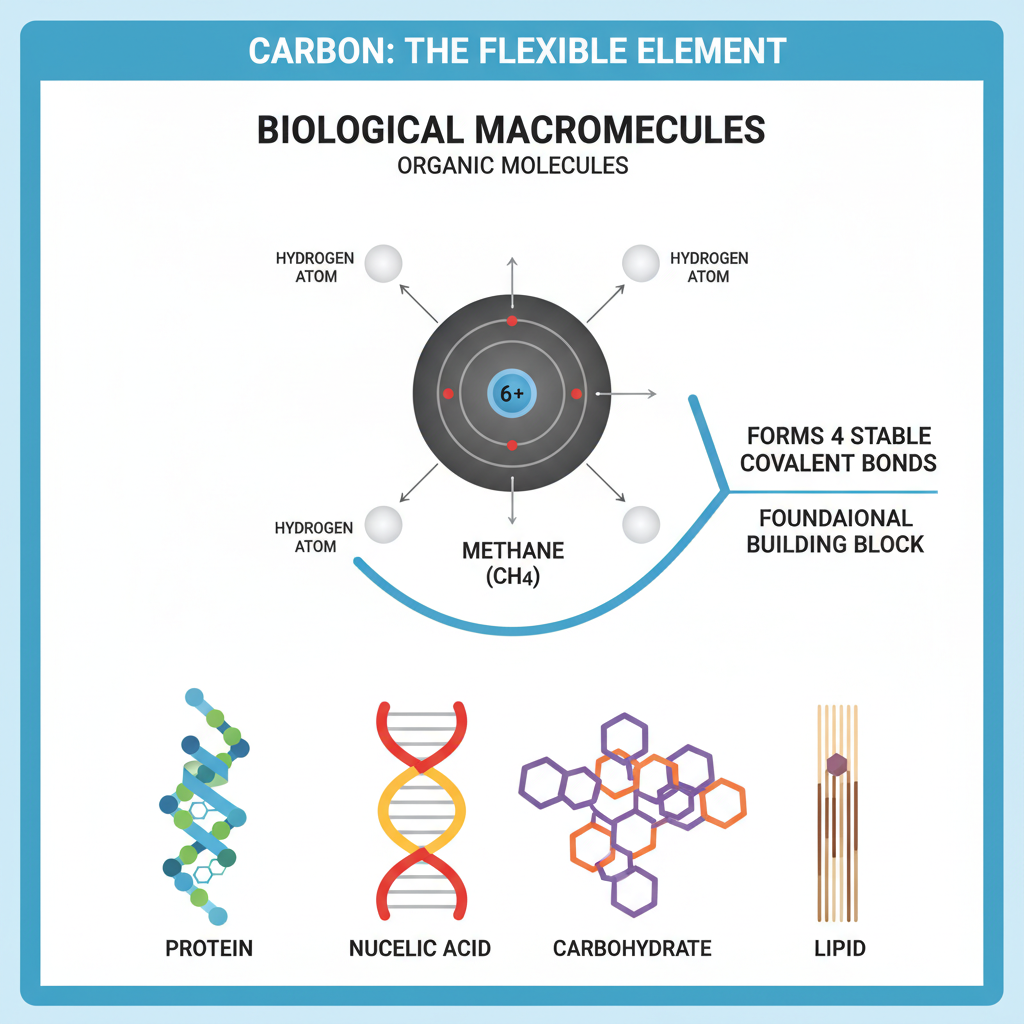
Illustration summarizing carbon's bonding versatility and role in macromolecules

The document, "Introduction to Carbon's Role and Bonding in Biological Molecules," provides a foundational overview of why carbon is essential for life and how its unique atomic properties lead to the diverse structures of organic molecules.

Main Topics Summarized:

The text begins by establishing carbon as the foundational building block for all biological macromolecules (proteins, nucleic acids, carbohydrates, lipids), defining them as organic molecules due to their carbon content. It then delves into the carbon atom's structure, explaining its atomic number (6), electron distribution (four valence electrons), and its ability to form four stable covalent bonds to satisfy the octet rule, making it a "flexible element." Methane (CH4) is presented as a prime example of carbon's tetrahedral bonding.

Next, the document introduces hydrocarbons, organic molecules made exclusively of carbon and hydrogen, highlighting their capacity to store large amounts of energy in their covalent bonds. It details how hydrocarbons can exist as various chains (straight, branched) and how the type of carbon-carbon bond (single, double, or triple) dictates the molecule's three-dimensional shape or conformation. Single bonds allow rotation and lead to tetrahedral geometry, double bonds result in planar shapes with restricted rotation, and triple bonds lead to linear structures.

Finally, the text explores hydrocarbon rings, distinguishing between aliphatic hydrocarbons (linear chains or rings with only single bonds, like cyclohexane) and aromatic hydrocarbons (closed rings with alternating single and double bonds, exemplified by benzene). It notes the presence of these ring structures in important biological molecules such as amino acids, cholesterol, and hormones, while also mentioning the carcinogenicity of benzene.


Top 5 Key Takeaways:

  1. Carbon's Fundamental Role in Life: Carbon is the unique and essential backbone for all organic molecules, including the complex macromolecules (proteins, DNA, carbohydrates, lipids) that constitute living organisms, enabling the vast diversity of life.
  2. Versatile Bonding Capacity: Due to its atomic number of 6 and four valence electrons, carbon can form up to four stable covalent bonds, satisfying the octet rule. This allows it to create diverse and complex structures by bonding with other carbons and various elements.
  3. Molecular Geometry Dictated by Bond Type: The specific type of covalent bond between carbon atoms significantly determines a molecule's shape and flexibility: single bonds lead to tetrahedral geometry and allow rotation, double bonds result in a rigid planar shape, and triple bonds create a linear structure.
  4. Hydrocarbons as Energy-Rich Skeletons: Hydrocarbons, composed solely of carbon and hydrogen, serve as the basic structural framework for biological molecules. The numerous covalent bonds within hydrocarbons store substantial chemical energy, released upon oxidation.
  5. Structural Diversity: Chains and Rings: Carbon atoms can link together in various forms, including straight, branched, or cyclic (ring) chains. These rings are further classified as aliphatic (single bonds) or aromatic (alternating single and double bonds, like benzene), both of which are integral components of numerous biological compounds.

Related Videos to Explore

For the point: Versatile Bonding Capacity

  • Carbon: The Stuff of Life
  • Carbon and its Compounds - Introduction | Don't Memorise
  • The Carbon Atom and Bonding (Organic Chemistry Basics) - The Organic Chemistry Tutor

For the point: Molecular Geometry Dictated by Bond Type

  • The Chemistry of Carbon-Carbon Double Bonds: Ethene and Beyond
  • How Do Single, Double, And Triple Bonds Affect Bond Angles?
  • Do Single, Double, Or Triple Bonds Change Bond Angles Differently?

See also: Document Outline, Glossary of Key Terms

Home > Document Outline


Document Outline

Here is a hierarchical outline of the document's main topics and sub-topics, structured for easy conversion into a mind map:

  • Carbon's Role and Bonding in Biological Molecules
    • I. Introduction to Carbon's Essential Role
      • A. Organic Molecules Defined
      • B. Macromolecules
      • C. Carbon as the Foundational Building Block ("Backbone")
    • II. Carbon Atom Structure and Bonding
      • A. Atomic Characteristics
      • B. Covalent Bonding Capacity
      • C. Example: Methane (CH4)
    • III. Hydrocarbons: Basic Organic Structures
      • A. Definition
      • B. Energy Storage
      • C. Three-Dimensional Shape (Conformation)
    • IV. Hydrocarbon Chains and Geometries
      • A. Chain Structures
      • B. Types of Carbon-Carbon Covalent Bonds
        • 1. Single Bonds (e.g., Ethane)
        • 2. Double Bonds (e.g., Ethene)
        • 3. Triple Bonds (e.g., Ethyne)
    • V. Hydrocarbon Rings: Aliphatic and Aromatic
      • A. Ring Structures
      • B. Aliphatic Hydrocarbons
      • C. Aromatic Hydrocarbons
      • D. Mixed Structures

For a more detailed explanation, see the Detailed Study Guide.

Home > Detailed Study Guide


Introduction to Carbon's Role and Bonding in Biological Molecules: A Study Guide

This study guide explores the fundamental properties of carbon that make it the central element for all life on Earth. We will delve into its atomic structure, diverse bonding capabilities, and the resulting variety of organic molecules, from simple hydrocarbons to complex ring structures found in living organisms.

I. The Central Role of Carbon in Life

Life as we know it is built upon a foundation of carbon. All complex molecules found in living cells, known as macromolecules, are carbon-based. These include essential biological components such as proteins, nucleic acids (like DNA and RNA), carbohydrates, and lipids. Any substance, whether liquid, solid, or gas, that contains carbon is defined as an organic molecule. Carbon's unique chemical characteristics make it the perfect "backbone" or main structural component for these vital molecules.

II. Carbon Atom Structure and Bonding Versatility

The exceptional ability of carbon to form a vast array of molecules stems from its atomic structure:

  • Atomic Number and Electron Configuration: Carbon has an atomic number of 6, meaning it possesses 6 protons and 6 electrons. These electrons are arranged in two shells: 2 electrons in the inner shell and 4 electrons in its outermost (valence) shell.
  • The Octet Rule: Atoms tend to achieve stability by having eight electrons in their outermost electron shell. This principle is known as the octet rule. Since carbon has only four valence electrons, it needs four more to satisfy the octet rule.
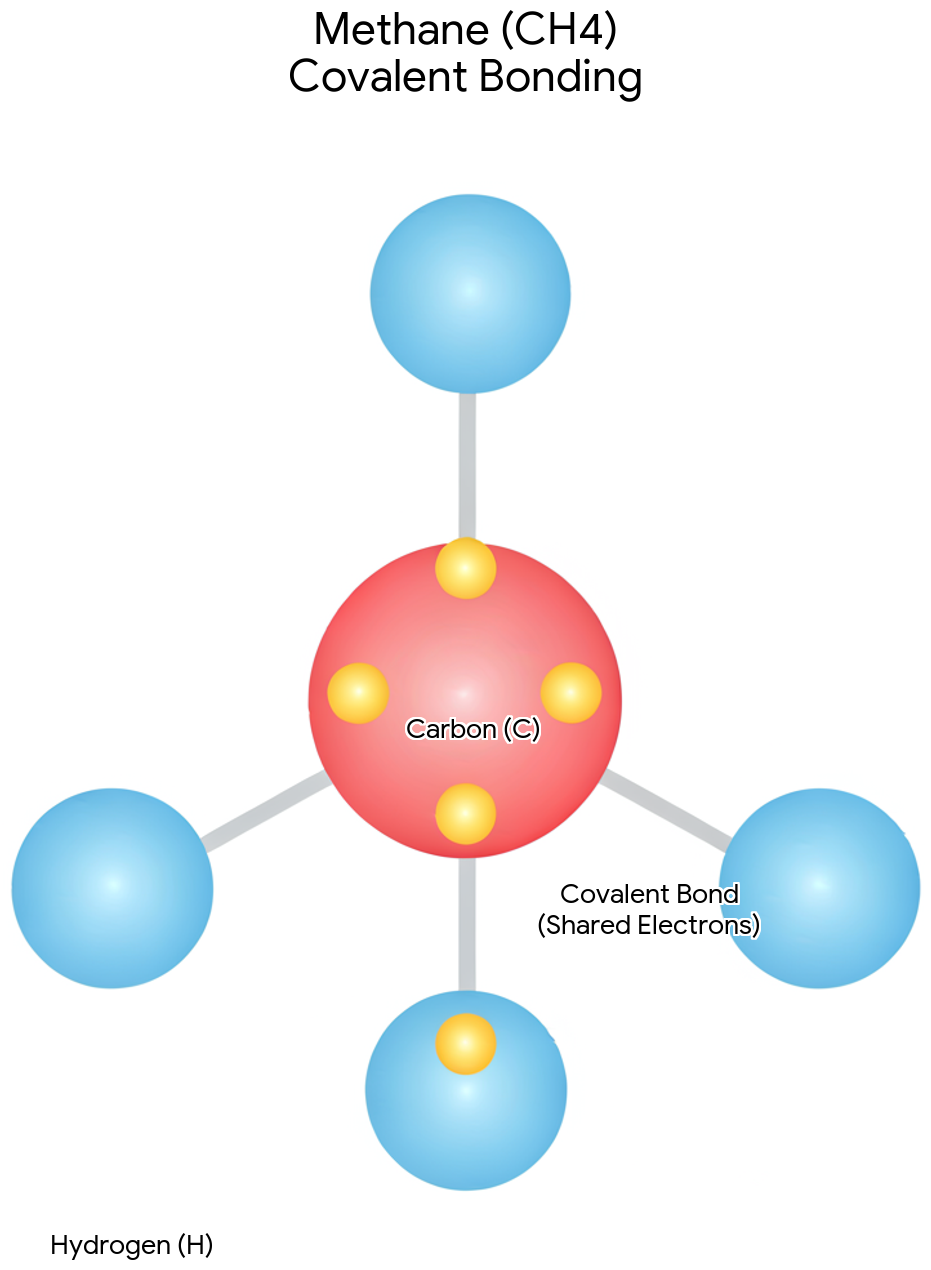
  • Forming Four Covalent Bonds: To achieve stability, carbon readily forms up to four strong covalent bonds with other atoms, including other carbon atoms. In a covalent bond, atoms share pairs of electrons. A simple example is methane (CH4), where a central carbon atom shares electrons with four hydrogen atoms, each forming a single covalent bond. This results in a stable configuration for the carbon atom.
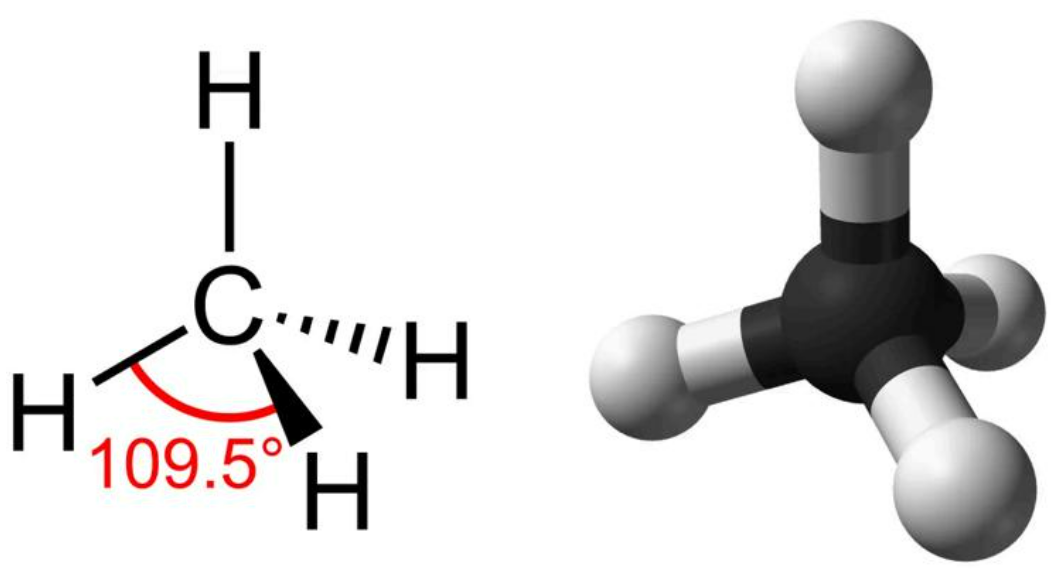
  • Molecular Geometry: Tetrahedral Shape: When carbon forms four single covalent bonds, the electron pairs repel each other, pushing the bonds as far apart as possible. This results in a tetrahedral geometry, where the carbon atom is at the center, and the four bonded atoms are at the vertices of a tetrahedron, with bond angles of approximately 109.5 degrees (as seen in methane). This three-dimensional arrangement is crucial for the overall shape of larger molecules.

III. Hydrocarbons: The Simplest Organic Frameworks

Hydrocarbons represent the most basic type of organic molecule, serving as fundamental building blocks:

  • Definition: Hydrocarbons are organic molecules composed exclusively of carbon and hydrogen atoms. Methane (CH4) is the simplest example.
  • Energy Storage: The numerous covalent bonds between carbon and hydrogen atoms (C-H) and between carbon atoms themselves (C-C) store a significant amount of chemical energy. This energy is released when hydrocarbons undergo oxidation (e.g., burning), making them excellent fuels.
  • Structural Versatility: Hydrocarbons can exist in diverse forms including chains (straight, branched) and rings.
  • Influence on Molecular Shape: The specific way carbon atoms are bonded within a hydrocarbon chain or ring (single, double, or triple bonds) is the primary factor determining the molecule's overall three-dimensional shape, or conformation. This shape is critical for the molecule's function, especially in biological systems.

IV. Hydrocarbon Chains: Types and Geometries

The type of covalent bond between carbon atoms dramatically affects a hydrocarbon's shape and flexibility:

  • Single Bonds (-ane suffix):
    • Geometry: Tetrahedral arrangement.
    • Flexibility: Allows for free rotation around the bond axis.
    • Examples: Ethane, Propane.
  • Double Bonds (-ene suffix):
    • Geometry: Planar (flat) arrangement.
    • Flexibility: Cannot rotate freely; atoms are fixed in position.
    • Examples: Ethene, Propene.
  • Triple Bonds (-yne suffix):
    • Geometry: Linear arrangement.
    • Flexibility: Cannot rotate; even more rigid than double bonds.
    • Examples: Ethyne, Propyne.

The prefixes "meth-", "eth-", "prop-", and "but-" indicate the number of carbon atoms in the main chain (1, 2, 3, and 4 respectively).

V. Hydrocarbon Rings: Aliphatic and Aromatic Structures

Beyond chains, carbon atoms can also form stable ring structures, categorized into two main types:

  • Aliphatic Hydrocarbons:
    • These include linear chains or rings where all carbon-carbon bonds within the ring are single bonds.
    • Examples: Cyclopentane, Cyclohexane.
  • Aromatic Hydrocarbons:
    • These consist of closed rings of carbon atoms that feature alternating single and double bonds.
    • Example: The benzene ring is the most common aromatic structure.
    • Biological Significance: Benzene rings are crucial components of amino acids, cholesterol, and steroid hormones like estrogen and testosterone.
    • Environmental/Health Note: Benzene is a known carcinogen.

See also: Timeline of Discoveries, Real-World Applications, Key Terms & Concepts

Home > Glossary of Key Terms


Glossary of Key Terms

Macromolecules

Complex molecules, such as proteins, nucleic acids (like RNA and DNA), carbohydrates, and lipids, which are vital components of cells.


Organic molecule

Any substance, whether liquid, solid, or gas, that contains carbon, and is especially vital for life.


Carbon

The foundational element that serves as the main structural component, or 'backbone,' for all biological macromolecules.


Carbon atom structure

An atom with an atomic number of 6, possessing two electrons in its inner shell and four valence electrons in its second (outermost) shell.


Octet rule

The principle stating that atoms tend to form bonds so they have eight electrons in their outermost electron shell to achieve stability.


Covalent bonds

Chemical bonds formed by the sharing of electron pairs between atoms, which carbon atoms can form up to four of.


Methane (CH4)

The simplest hydrocarbon molecule, featuring a central carbon atom bonded by single covalent bonds to four different hydrogen atoms, resulting in a tetrahedral geometry.


Tetrahedral geometry

A three-dimensional molecular shape where a central carbon atom forms four single bonds, positioning the bonded atoms at the vertices of a tetrahedron with approximately 109.5° angles.


Hydrocarbons

Organic molecules made entirely of carbon and hydrogen, capable of storing large amounts of energy in their covalent bonds.


Hydrocarbon chains

A series of bonds between carbon atoms that can be straight, branched, or unbranched, forming the main structure of large molecules.


Single covalent bond

A carbon-carbon bond formed by sharing one pair of electrons, allowing rotation around its axis and leading to tetrahedral geometry around the carbon.


Double covalent bond

A carbon-carbon bond formed by sharing two pairs of electrons, resulting in a flat (planar) molecular arrangement and restricting rotation around the bond.


Triple covalent bond

A carbon-carbon bond formed by sharing three pairs of electrons, leading to a straight (linear) molecular arrangement and highly restricted rotation.


Planar arrangement

A molecular geometry where atoms, particularly those involved in a double bond, lie in a single flat plane.


Linear arrangement

A molecular geometry where atoms, particularly those involved in a triple bond, are arranged in a straight line.


Aliphatic hydrocarbons

Hydrocarbons characterized by linear chains of carbon atoms or rings where all carbon-carbon bonds within the ring are single bonds.


Aromatic hydrocarbons

Hydrocarbons consisting of closed rings of carbon atoms that have alternating single and double bonds, such as the benzene ring.


Benzene ring

A specific type of aromatic hydrocarbon, typically a six-membered carbon ring with alternating single and double bonds, found in various biological molecules and identified as a carcinogen.


Carcinogen

A substance that has the potential to cause cancer.


Conformation

The specific three-dimensional shape or spatial arrangement of a molecule, which is crucial to how large molecules (macromolecules) function.


See also: Summary & Key Points
Home > Timeline of Discoveries


Timeline of Discoveries

1776: Discovery and isolation of methane gas

By: Alessandro Volta

Source

1825: Discovery and isolation of benzene

By: Michael Faraday

Source

1855: Coining of the term 'aromatic' in a chemical context

By: August Wilhelm Hofmann

Source

1865: Proposal of the cyclic structure of benzene

By: Friedrich August Kekulé

Source

1874: Proposal of the tetrahedral carbon atom theory

By: Jacobus Henricus van 't Hoff, Joseph Achille Le Bel

Source

1916: Development of the concept of covalent bonding

By: Gilbert N. Lewis (concept), Irving Langmuir (term)

Source

1916: Formulation of the octet rule

By: Gilbert N. Lewis, Walther Kossel

Source

1931: Development of Hückel's Rule for aromaticity

By: Erich Hückel

Source

See also: Detailed Study Guide

Home > Real-World Applications


Real-World Applications

Daily Life / Energy

Hydrocarbons, such as methane in natural gas and the components of gasoline, are primarily used as combustible fuel sources for electricity generation, heating homes, and powering transportation like cars and airplanes.


Technology / Materials Science

Carbon's ability to form diverse covalent bonds leads to materials like diamond (extreme hardness for industrial cutting), graphite (softness and electrical conductivity for lubricants and battery electrodes), and advanced carbon nanomaterials such as carbon nanotubes and graphene, used in high-strength composites for aircraft and space structures, as well as in electronics and sensors.


Medicine / Pharmaceuticals

Aromatic hydrocarbons, characterized by their stable ring structures, are foundational for synthesizing many medications, including analgesics (like aspirin), anti-inflammatory drugs, and various pharmaceuticals used to treat serious illnesses. Phenol derivatives are also used as antiseptics and disinfectants.


Daily Life / Food & Nutrition

Carbohydrates, which are organic compounds primarily made of carbon, hydrogen, and oxygen, serve as the body's main energy source. Simple sugars provide quick energy, while complex carbohydrates like starch offer sustained energy release. Lipids, another carbon-based macromolecule, are crucial for energy storage, insulation, and forming cell membranes, and are found in foods like oils and seeds.


Industrial Chemistry / Manufacturing

Hydrocarbons are vital raw materials in the petrochemical industry, serving as building blocks for producing plastics (e.g., polyethylene, polypropylene), synthetic fibers (like nylon and polyester), rubber, solvents, and detergents.


See also: Detailed Study Guide

Home > Key Terms & Concepts


Key Terms & Concepts

  • Carbon's Role in Biological Molecules
    • Organic Molecule
    • Macromolecules (Proteins, Nucleic acids, Carbohydrates, Lipids)
    • Foundational building block
  • Carbon Atom Structure
    • Atomic number: 6
    • Electron distribution (2 inner, 4 outer)
    • Octet Rule
    • Covalent bonds (up to four)
    • Methane (CH4) example / Tetrahedral geometry
  • Hydrocarbons
    • Definition: Made of carbon and hydrogen
    • Energy storage
    • Molecular shape (conformation)
  • Hydrocarbon Chains: Types and Geometries
    • Chain structures (straight, branched, etc.)
    • Carbon-carbon bond types
      • Single bonds (-ane, tetrahedral, rotation)
      • Double bonds (-ene, planar, no rotation)
      • Triple bonds (-yne, linear, restricted rotation)
  • Hydrocarbon Rings: Aliphatic and Aromatic
    • Aliphatic hydrocarbons (single bonds)
    • Aromatic hydrocarbons (alternating bonds, e.g., Benzene)
    • Mixed structures

See also: Detailed Study Guide

Home > Mind Map


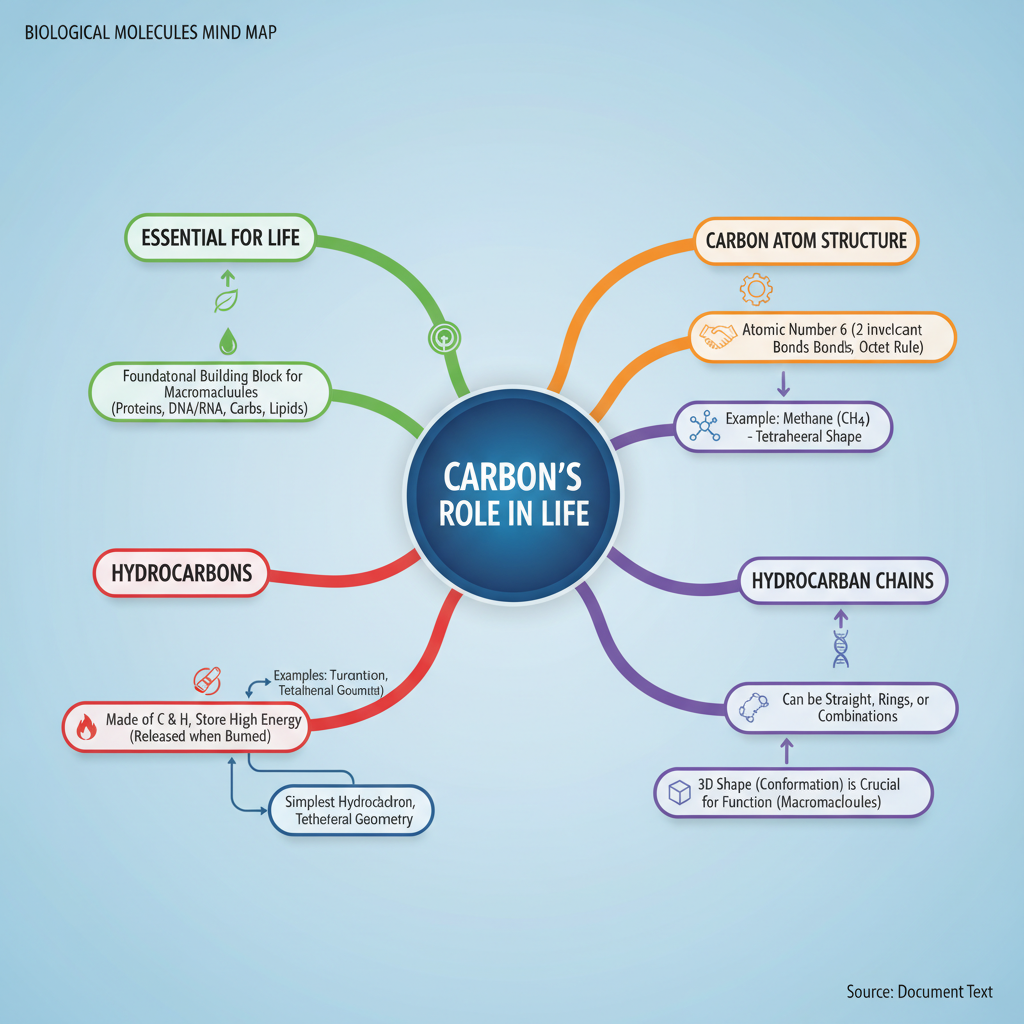
Mind Map

Mind map visualizing the concepts of carbon bonding, hydrocarbons, and molecular structures.

See also: Document Outline

Home > Multiple Choice Quiz


Multiple Choice Quiz

1. What is the atomic number of carbon, and how are its electrons distributed in its shells according to the document?

2. According to the text, what is a primary characteristic of hydrocarbons regarding energy?

3. Which of the following correctly describes the geometry and rotational freedom associated with a carbon-carbon double bond?

4. How does an aliphatic hydrocarbon ring primarily differ from an aromatic hydrocarbon ring, based on the provided text?

5. What is emphasized as crucial for the function of large biological molecules (macromolecules) that use hydrocarbons as their main structure?

Home > True/False Quiz


True/False Quiz

1. Carbon is considered the foundational building block for all biological macromolecules, such as proteins and DNA.

2. To satisfy the octet rule, a carbon atom typically forms up to four covalent bonds with other atoms.

3. Hydrocarbons are defined as organic molecules composed entirely of carbon and oxygen.

4. Carbon-carbon single bonds allow for free rotation around the bond's axis, while double bonds result in a planar arrangement and cannot rotate.

5. Aromatic hydrocarbons consist of closed rings of carbon atoms that have only single bonds.

Home > Short Answer Quiz


Short Answer Quiz

1. Carbon's ability to form four stable covalent bonds is highlighted as crucial for its role as the 'backbone' of macromolecules. If carbon could only form two covalent bonds, how would this fundamentally limit the complexity and diversity of biological molecules compared to what exists?

Need a clue?
Consider the structural possibilities for branching and creating intricate three-dimensional shapes when building with different numbers of connection points.

2. The document explains that single carbon-carbon bonds allow rotation, while double and triple bonds are rigid. Explain how this difference in rotational freedom could impact the biological function of a large macromolecule, using an example of a specific macromolecule type (e.g., protein, lipid) if you can infer one.

Need a clue?
Think about how a molecule needs to interact with other molecules or adapt its shape for specific tasks, and what flexibility or rigidity might offer in those scenarios.

3. Hydrocarbons are presented as basic frameworks, but biological macromolecules like proteins and DNA have very specific and diverse functions. Beyond the carbon backbone, what additional feature, briefly mentioned in the learning objectives, would be necessary to confer such specific chemical properties and biological activity to these complex organic molecules?

Need a clue?
Recall that hydrocarbons can be "decorated" with other groups to give them specific properties.

Home > Image & Asset Gallery


Image & Asset Gallery

This page contains a collection of all images found in the study materials.

Summary Illustration
Mind Map Visualization
Extracted Image 1
Extracted Image 1
Extracted Image 2
Extracted Image 2

See also: Home